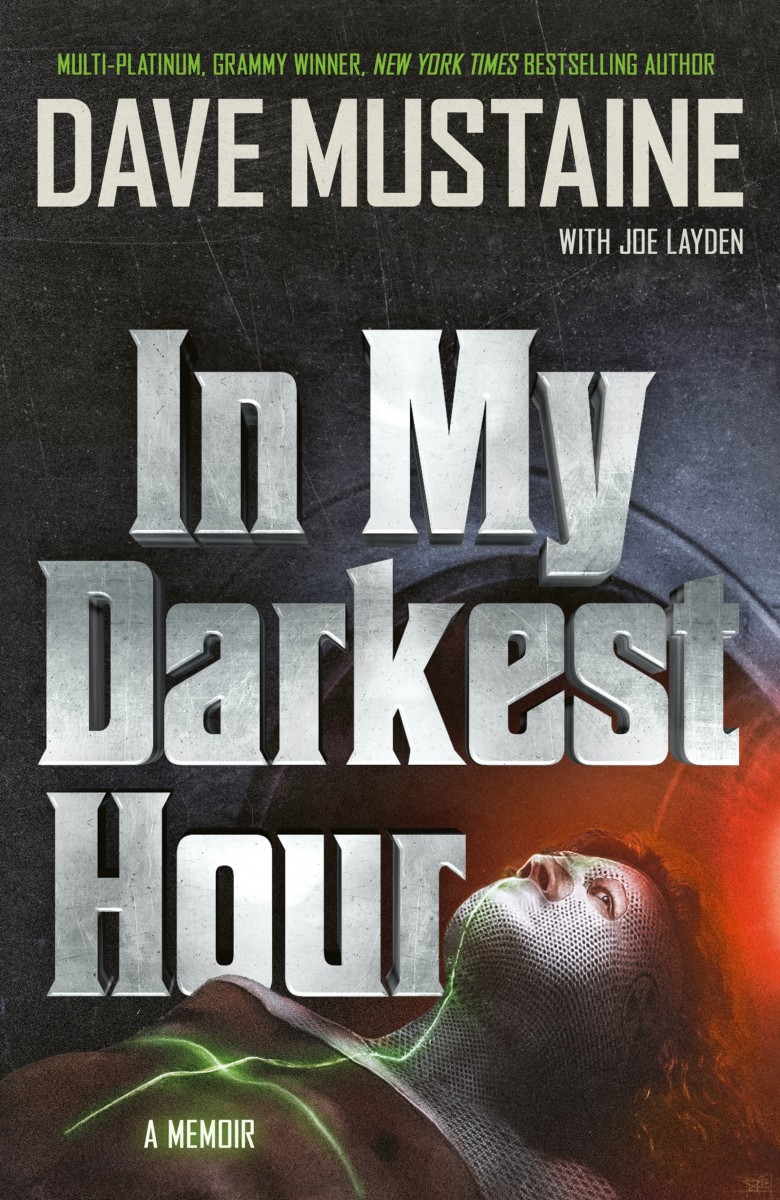
In My Darkest Hour: A Memoir by Dave Mustaine (Book)
Release Date: 24th September 2026
Publisher: Da Capo Press
Pre-Order
Amazon
Genre: Heavy Metal, Autobiography, Memoir.
FFO: Megadeth
Review By: Trina Julian Edwards
Dave Mustaine hardly needs an introduction, but for anyone who does not know, he is the founder, lead vocalist, and guitarist of Megadeth. Mustaine is a foundational figure in the American thrash metal genre, and in his four decades in the music business, he has earned both critical acclaim and notoriety for his artistry, ambition, and cantankerousness. His latest memoir, In My Darkest Hour, recounts his experience with cancer, the treatment that followed, and the impact it had on his music, family, and perspective on life. The book is scheduled for release on September 24, 2026.
Mustaine begins In My Darkest Hour with the discovery that he has mouth cancer. More specifically, he had squamous cell carcinoma at the back of his tongue, a particularly difficult location for someone whose career depends on singing. The cancer had spread to his lymph nodes and across the midline of his tongue. Mustaine includes a chapter from his doctor explaining the diagnosis and treatment, helping readers grasp the severity of the cancer and the potential impact on both his career and his life.
After his diagnosis, Mustaine decided that his job was to find the best treatment available and then do what the doctors told him. For someone with a reputation as a notoriously demanding perfectionist, and someone who has fired people for not meeting his standards, his willingness to let go seems out of character. He wasn’t going to research every possible treatment or try to control every aspect of the process. His philosophy was to find the best people and let them do their jobs.
The hardest part, he says, was the beginning: the fear and uncertainty of not knowing what was going to happen. He worried about radiation, losing his hair, and everything else that comes with being told that the thing growing inside you could kill you.
The pain and medication were another concern. Mustaine’s doctor explained that the pain medications did not work on him as they should because of his high tolerance for narcotics, while his family understandably worried about the amount of medication he needed during concurrent chemotherapy and radiation. Mustaine is very open about the years he spent as an addict, discussing treatment centers, Alcoholics Anonymous, and the effects his drinking and drug use had on his body and those around him.
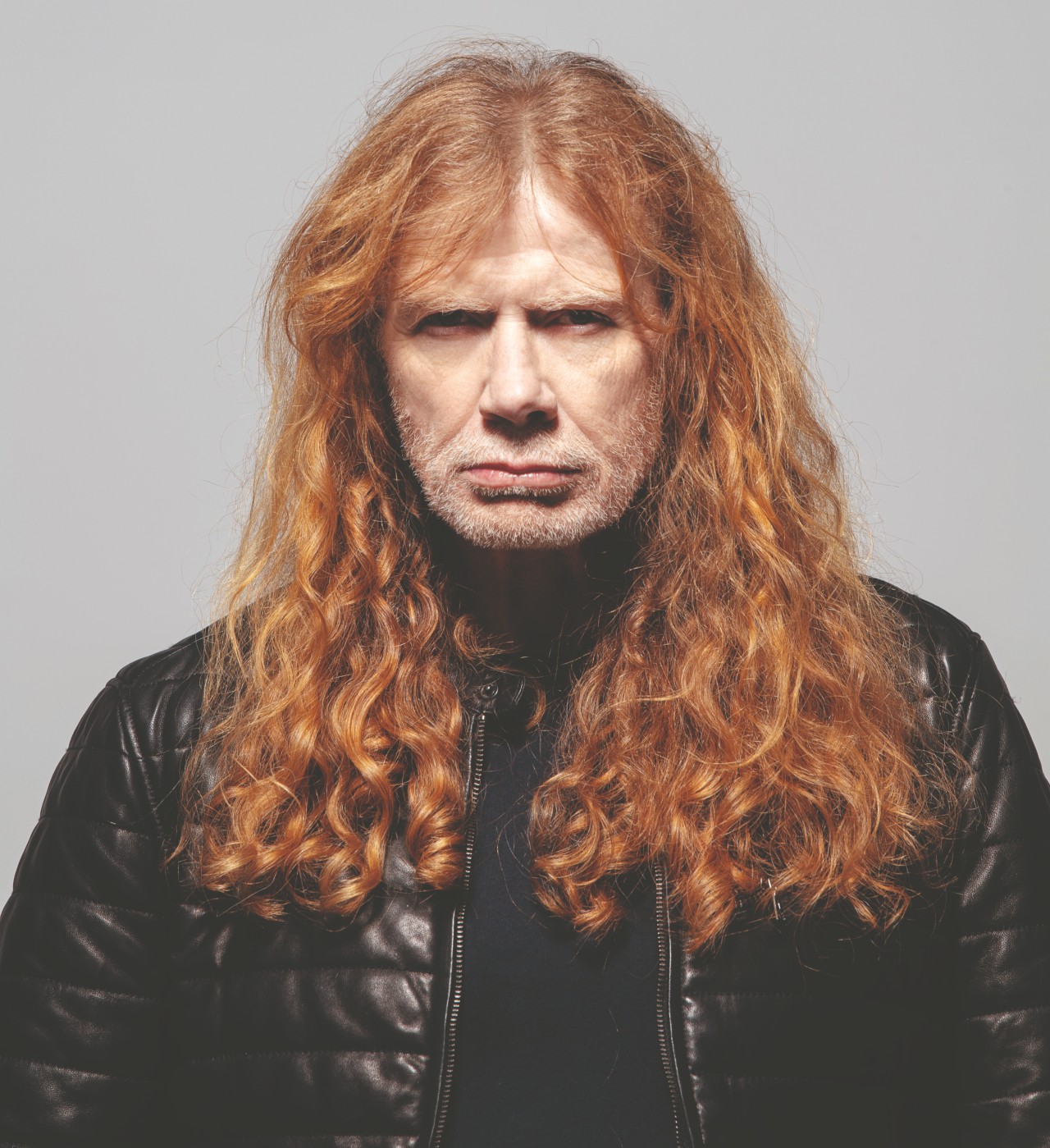
That same willingness to confront uncomfortable truths extends to the rest of his past. Mustaine takes responsibility for the anger, drinking, drugs, fighting, and destructive behavior that have caused problems throughout his life. At one point he writes, “without accountability, there can be no change, no improvement, and certainly no transcendence.” Mustaine grew up poor, with an alcoholic and later MIA father, and was raised by a Jehovah’s Witness mother who viewed much of modern medicine as “voodoo.” He recalls being bullied and living on the streets as a teen.
It’s no wonder Mustaine has spent much of his life trying to prove something. He wanted to prove he wasn’t just “the belligerent drunk who got tossed out of Metallica.” He wanted to show that Megadeth could stand alongside Metallica. When viewed through that lens, his anger and competitiveness begin to make more sense. Not as excuses for his behavior, but as context for it.
There is still plenty of Dave Mustaine braggadocio, but it would be strange if there weren’t. One of the things that makes In My Darkest Hour work, however, is that alongside the braggadocio is genuine vulnerability.
Mustaine talks openly about being scared. He worried about whether he would make it through treatment. At one point, he admits that quitting and dying might seem preferable to continuing, and he worries about whether he would live up to his own reputation as a tough guy. He even wonders whether he might turn out to be a “pussy,” which is a surprisingly vulnerable admission from someone whose public persona has been partially built around never backing down. He knows his reputation for being difficult and acknowledges that the revolving door of musicians in Megadeth doesn’t help. He recognizes that grudges and anger issues have caused him to stand in his own way.
So, of course, the Metallica rivalry also gets a mention. Mustaine acknowledges that Metallica has consistently been ahead of Megadeth in sales, while arguing that Megadeth has been more consistent and remained closer to its thrash-metal roots. Honestly, he’s not wrong. He has never been shy about believing in his own accomplishments, and frankly, he has earned the right. He helped lay the foundation for two of the most influential metal bands of all time, and his songwriting contributions on Metallica’s Kill ‘Em All and Ride the Lightning are part of that history.
He talks about James Hetfield of Metallica as both friend and nemesis, although in Mustaine’s view, the hatchet is now “long buried.” It was clearly important to Mustaine that Hetfield reached out after hearing about the cancer diagnosis. Mustaine makes the point that when someone has cancer, just being there matters. You don’t necessarily need to have the right words or advice. Sometimes just reaching out with support and love is what a person needs most, and it is vital to the healing process.
That support is especially meaningful in light of how Mustaine views his own history. He jokes that Hetfield used to say Mustaine “must have a horseshoe stuffed up [his] ass” considering all the times he’s cheated death, but beneath the humor is a genuine reckoning with how lucky he has been. He acknowledges that he spent too much time dwelling on everything that had gone wrong instead of recognizing how much had gone right.
His treatment also coincided with another important part of his life: making music. Mustaine’s treatments took place at Vanderbilt in Nashville, and a recording studio was set up near his home so that his band and producer could come to him. Megadeth was working on The Sick, the Dying… and the Dead! at the time, and Mustaine worked on the album whenever his treatment schedule and physical condition allowed. He might have treatment in the morning and work on music later in the day.
The album wasn’t intended to be a musical chronicle of his cancer experience, but as Mustaine acknowledges, you can’t go through something like that without it affecting you. It strengthened his faith, but also challenged him as an artist.
Family is another central theme in the book. Mustaine says he is proudest of raising two good-hearted children and gives much of the credit to his wife, Pam. He describes theirs as a traditional marriage in the decidedly non-traditional world of heavy metal: he toured while she stayed home and raised the family. He believes his family is one of the reasons he survived — not just the cancer, but the years when drugs, alcohol, ambition, and anger could have destroyed him.
The stories from his doctor, family, bandmates, and martial-arts instructor add another dimension to the memoir because they show Mustaine in all of his various roles, not just the heavy-metal legend.
Today, Mustaine is cancer-free, but the specter always lingers. In January of this year, Megadeth released their final planned studio album, the self-titled Megadeth, which debuted at number one on the Billboard 200 chart. It was their first-ever number one debut. Mustaine makes it clear that having cancer changed him in significant ways. Of course it did. How could it not?
And maybe that’s the most real version of Dave Mustaine. Not the angry kid who was kicked out of Metallica, not the demanding Megadeth frontman, not the former addict who seems to have cheated death more times than he can count, but the husband, father, patient, and aging musician who finally has to confront the fact that he isn’t invincible.
 (5 / 5)

