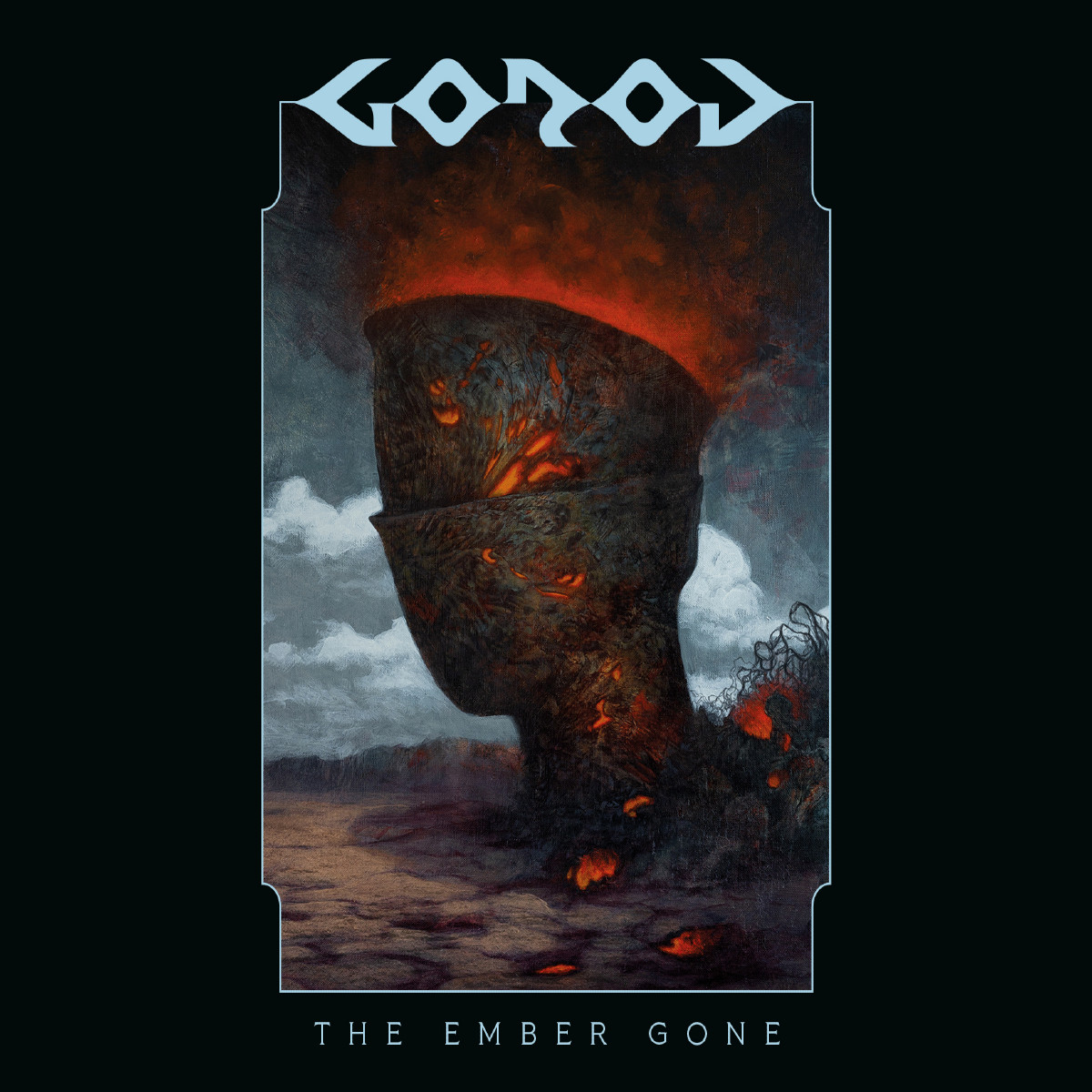
Gorod – The Ember Gone
Release Date: 28th August 2026
Label: Base Productions / Season of Mist
Stream
Genre: Technical Death Metal
FFO: First Fragment, Necrophagist, Sun Ra, Der Weg einer Freiheit, Augury, Revocation.
Review By: Malte Brigge
Techdeath is one of my favorite branches of the metal family tree, but as fun as it is to listen to, it can be tiring: it’s difficult to spend a lot of time with something so energetic and slippery. Styles range from rivetingly mechanical (Zenith Passage) to so wildly loose there’s nowhere to place your feet (Atheist). There’s your Defect Designers, who rush through ideas with such abandon the idea of “song” loses meaning, and your First Fragments, whose skill and talent becomes a thing you just quietly worship. Then there’s Gorod, a band that surprises with their focus, even when they reach for the grandiose. Each new album reveals evolving structural maturity and a more perfected sense of balance. Presenting us now with The Ember Gone, Gorod shows they are still growing but can still surprise us.
If the band’s current trajectory can be traced back to the monumental Transcendence EP (2012), then Julien Deyres’ development as vocalist really begins with 2015’s A Maze of Recycled Creeds. His growth is a critical part of what helps Gorod stand apart in the tech/death scene. His first appearance on The Ember Gone is a sotto sprechgesang growl that made me think of Crippling Alcoholism more than any other band, and the way he grows to a roar on top of panic riffs builds a slow anxiety that’s laced throughout the album and (probably) ties into its themes (I lack a lyrics sheet, but the monosyllabic titles alone suggest a narrative device at work). He shifts vocal patterns to suit themes, from choral cleans to blackened rasps to harmonic multi-tracked howling, creating dense textures that plunge through various emotional states. His strained, broken-souled phrasing on Forgiveness is far from radio-friendly, and the almost out-of-place choral harmonies on Regret establish an unsettlingly sardonic mood that would be lost if he simply roared through every moment.
Gorod’s angular approach and fretboard wonderwork are as present as ever, but it’s the balance of distortion and clean production that brings out the best of what they do. There’s a strong focus on melody and mood on The Ember Gone, but much of the album could be described more in jazz than metal terms. Indeed, at times it feels more akin to a highly technical jam than forced writing. Mathieu Pascal and Nicolas Alberny continue to impress with their stringed precision and weird creativity. Sharp, knifey riffs on opener Signs give way to the twangy, blues-driven “Toast to the Extras” groove of Regret; heavy, palm-muted chord picking and stunning, heartful solos on instrumental Crimson are counterpointed by strange, circular enclosure zones that define Forgiveness and Regret. Pascal and Alberny dance around time signatures and lead smooth transitions that never stray too far from primary motifs. The guitarwork moves from spasmic livewire sparking to smooth, Floydian (think Atom Heart Mother), layered, loopy builds that at times crunch like glass and other times are horn-like in their enunciation.
Benoit Claus’s basswork rarely takes center stage but never loses its presence, though I wouldn’t mind a bit more clarity in the mix at times. The bass serves as a harmonic glue that anchors the guitar work by building around root notes, but never loses its independence or voice. Karol Diers is a rare metal drummer who actually plays the kit, calling and responding in the songs rather than smashing and grabbing. He spends a lot of time exploring the cymbals with linear restraint, articulating with more jazz-fusion impulse rather than creating a wall of splash. His controlled precision adds intricate layers to the guitars, keyboards and bass, reacting to musical developments instead of bulldozing through them with blast beats, though there are those, too. His unexpected accents on the off-beats and carefully controlled playfulness establishes complex but transparent boundaries framing ideas and thematic layouts without choking them.
The Ember Gone is dark, a little twisted, never lets you settle into anything resembling ease and remains just outside the grasp of comfort. Despite its psychological weight, it is immensely enjoyable to listen to. This is Gorod’s most unique album, building from atmospheric, emotive qualities introduced as far back as “Transcendence” as well as the more exploratory elements of The Orb, and pushing them in new directions without sacrificing technical complexity or their rich, musical awareness. They’ve always been a sharp and clever band; the songs on The Ember Gone reveal a reflective, introspective side of their songwriting that already makes me eager for the next chapter in their evolution.
 (4.5 / 5)

