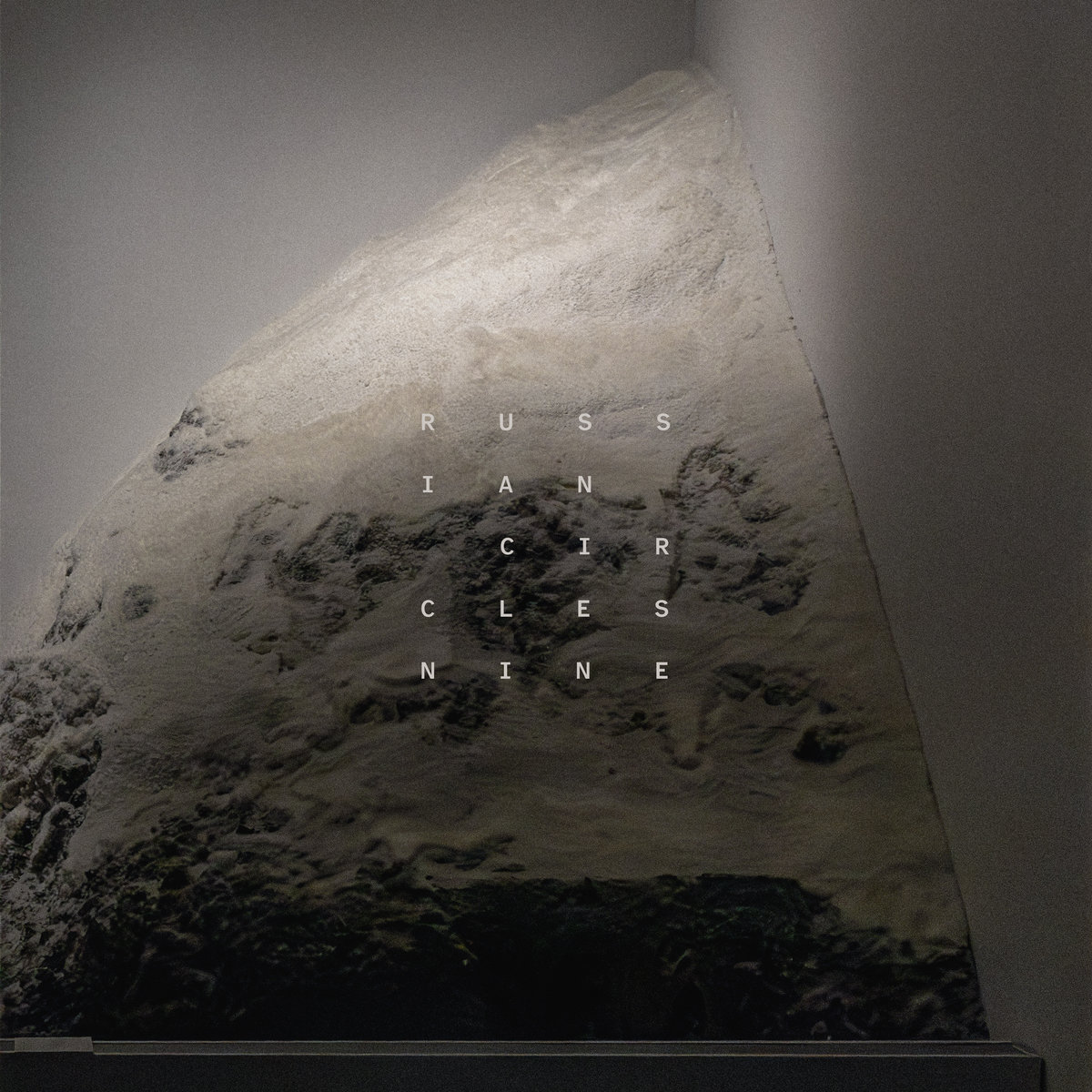
Russian Circles – Nine
Release Date: 28th August 2026
Label: Sargent House
Bandcamp
Genre: Instrumental Post-Metal
FFO: Pelican, Mogwai, Red Sparowes, ISIS, Cult Of Luna.
Review By: John Newlands
American instrumental post-metal juggernauts Russian Circles return with their ninth full-length offering, Nine. At this point, Brian Cook, Dave Turncrantz, and Mike Sullivan are nothing short of statesmen within the world of instrumental heavy music. Since their formation in 2004, the Chicago trio have built an enviable catalogue of consistently excellent releases while establishing themselves as one of the most captivating live acts in the genre. Whether commanding intimate club stages or massive festival crowds at events such as ArcTanGent, Russian Circles have earned their reputation through sheer quality, musical integrity, and an unwavering commitment to their craft.
Nine opens with Borehole, a driving, crunchy, riff-driven track that immediately feels familiar to longtime fans. Rather than reinventing the band’s formula, it confidently embraces the strengths that have defined Russian Circles for over two decades. Expansive and cinematic, the track steadily builds in both intensity and weight, gradually unfurling layer upon layer until it reaches a satisfyingly colossal climax. It’s a statement of intent and an excellent album opener.
Lead single Empath follows, beginning with what sounds like a distant air-raid siren before a bass tone capable of rattling teeth and filling underpants emerges from the depths. Fast-picked guitar lines and pummelling percussion soon propel the song forward, creating one of the heaviest and most immediate moments on the album. The track demonstrates just how effective Russian Circles remain when operating at maximum force.
While the trio generally stay within their established sonic framework, they are not afraid to introduce fresh textures. Eluvial opens with an arpeggiated synth line that immediately broadens the album’s palette, lending the track an almost spectral or futuristic quality. Across Nine as a whole, electronic elements and programming are more pronounced than on some previous releases, adding subtle layers of depth and atmosphere without ever feeling gimmicky or distracting. It is a welcome evolution that enhances rather than dilutes the band’s signature sound.
The accompanying press material describes track four, E2, as effectively representing the beginning of Side B, and the distinction is immediately noticeable. There is a palpable shift in mood and pacing. A deep, throbbing synth pulse underpins finger-tapped guitar phrases while Brian Cook’s fluid bass work seeps through the mix like molasses poured over shattered concrete. The result is hypnotic and immersive, a piece that ebbs and flows with effortless grace. Before long, Meridian arrives and sinks its hooks in, continuing the album’s sense of momentum while further developing its darker emotional undercurrents.
Arletta serves as a brief but effective palate cleanser. Composed around a solitary classical guitar performance, it momentarily strips away the towering walls of sound that dominate much of the record. The calm is short-lived, however, as album closer Seventh Seal delivers one final assault. Opening with thunderous bass, aggressive guitar work, and relentless drumming, it initially ranks among the heaviest material on the record. Midway through, the song descends into a slower, half-time chug that feels immense in scale before gradually dissolving into a dark, elegant, and entirely fitting conclusion.
One of the qualities I have always admired about Russian Circles is their ability to write music that is instantly recognisable as their own. In a genre where countless bands can blur together, particularly within the broader post-rock and post-metal sphere, Russian Circles possess a distinct identity. They may not write conventional “hit songs”, but their compositions are undeniably captivating. While certain riffs and motifs linger long after the music stops, it is the cumulative experience of an entire album that leaves the strongest impression. Nine is very much a record that rewards being experienced from beginning to end.
The production is top tier. Tracked primarily at Steve Albini’s Electric Audio and completed by Kurt Ballou at GodCity Studio, Nine sounds exactly as Russian Circles should. Every instrument occupies its own space while retaining a sense of overwhelming power. The record is immense, articulate, and crushingly heavy when required, yet equally capable of sounding ethereal, spacious, and beautifully restrained during its quieter moments.
Ultimately, Russian Circles are not attempting to reinvent the wheel (excuse the pun) on Nine, and neither they nor their audience should want them to. Instead, the band continue refining and expanding a formula they have spent over twenty years perfecting. The result is another remarkably strong release that offers listeners a familiar Russian Circles experience while introducing enough new textures and moods to keep things feeling fresh.
What continues to impress me most is how faithfully the band reproduce their studio material in a live setting. Having seen them perform numerous times over the years, I can confidently say that there is no smoke and mirrors involved, they are truly impressive. Everything on Nine feels achievable by the trio on stage, which remains an extraordinary feat for a three-piece band creating music of such massive scope.
So, in closing, Nine may not radically alter the Russian Circles blueprint, but it really reinforces exactly why the band remains one of the most respected and enduring names in instrumental post-metal. This album is heavy, atmospheric, meticulously crafted, and deeply immersive, it is exactly what I would expect and offers listeners yet another formidable entry in an already exceptional back-catalogue.
 (4.5 / 5)

