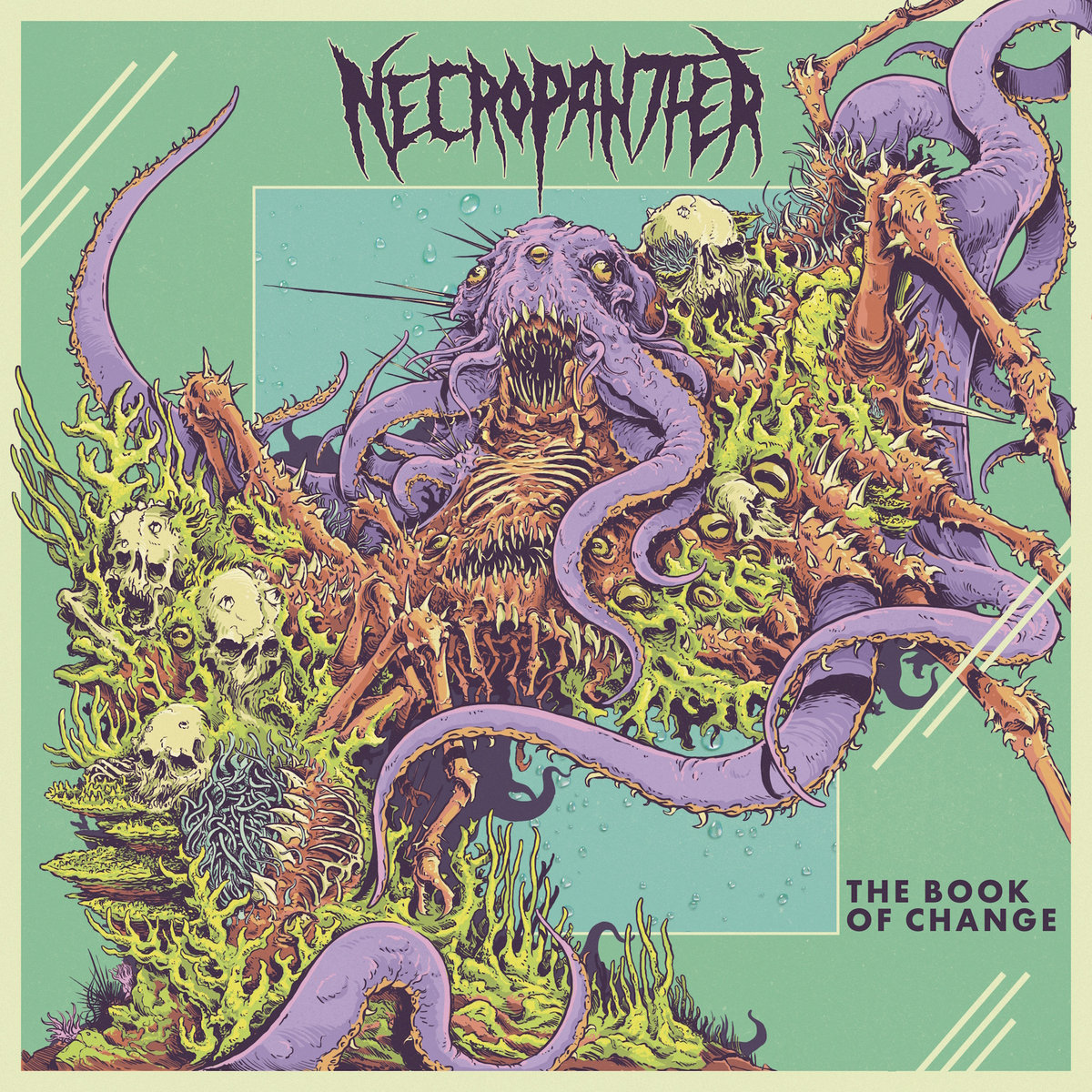
Necropanther – The Book of Change
Release Date: 13th November 2026
Label: Self-Released
Bandcamp
Genre: Blackened Thrash Metal
FFO: Skeletonwitch, Nightwraith, Horrendous, Warbringer, Revocation.
Review By: Netheraugur
There is something to everything in life. There is something in how we wake up; there is something in “enjoying every sandwich” (to paraphrase one of my favourite (and heartbreaking) interviews ever). There is something in the music we like and listen to. And there is obviously something in playing Motörhead riffs at breakneck speeds while soaked in theatrical darkness, with vocals that sound like you’re reaching us terrestrials from the gates of hell. That. Now, that is generally called blackened thrash metal, and in the 1980s, it was pretty much… it! It’s a genre that has barely disappeared from my playlists, as sometimes I need that adrenaline in my daily listens. But, well, as with every living thing, there is evolution – and decades later, the genre has morphed and evolved into something much more intricate and ambitious than that. We’re currently witnessing a fantastic wave of concept-driven, thematically conscious blackened thrash. Take Wraith’s stellar new record as a great example, where speed and unpretentious riffing meet genuine narrative intent. Denver’s own Necropanther belongs in the same arena, and they come in with their fifth full-length, The Book of Change. So, let’s see what they have to offer.
First things first: forget single plotlines or concepts of “grandeur” and epic proportions; the band instead tackles an overarching study and exploration of metamorphosis, evolution and body horror. They blend together Shakespearean drama, Cronenbergian nightmare, Goethean tragedy, 1950s sci-fi and classic arcade games without them ever feeling disjointed (or out of place). What a time to be alive… So get ready. Get ready for 40 minutes of pure black-thrash bliss, and yes, I’ll say it already (spoiler alert!): PERFECTION.
The record kicks off with The Tempest, and the rototom (or concert tom, not sure) intro fill alone is so damn cool it deserves its own mention. The title introduces the obvious literary theme, while the opening notes instantly capture the spirit of the album – bringing concept and music together in a blistering and cohesive way. The energy rockets through the roof immediately with incredible growls and shrieks, anchored by a greasy black’n’roll riff and a scorching guitar solo. From there, we plunge into Caliban (named after Shakespeare’s tragic and deformed island beast). The dual guitar work here is great throughout, but the real standout is the half-tempo bridge solo – it honestly feels out of this world; what a great and fantastic performance we witness here. The rhythm section of bassist Marcus Corich and drummer Adam Frost keeps everything locked in extraordinarily tight. We keep things Shakespearean with Ariel’s Song, a song that sounds like a majestically intense tribute to the island’s magical spirit. There are no breaks or half-time slowdowns here – just searing speed, pure velocity and razor-sharp dual vocals. Closing out this opening literary quartet dedicated to the bard is Prospero, dedicated to The Tempest’s exiled sorcerer. It carries that same frantic momentum, driven by top-notch driving basslines from Corich.
The band changes gears, and we go directly to visit Goethe’s classic tale of demonic pacts with Faust. It’s another intense and burning track, where death metal influences begin creeping around the edges. The middle section is amazing – the guitar solo sounds like it’s climbing its way up from the depths of hell to grab you; stellar stuff. Mephistopheles continues the Faustian thread with constant, fast-as-hell pacing that carries a subtle punk edge. Its short and sweet dual guitar solo over a half-time section hits the spot perfectly. Then comes The Thing From Another World, drawing from the ‘50s sci-fi classic. Just when you think it’s a standard banger and doesn’t really stand out as much, two minutes in, the band drops off-beat hits, an incredible rhythm syncopation that skyrockets the song into prog territory, launching another magnificent guitar solo, full of awesome motifs and delicious repeated arpeggios. Rampage/Scum Labs slows down the tempo (at least compared to the rest of the speed demons here), leaning heavily into death metal weight for an absolute crusher of a track inspired by the famous game franchise.
Seven Mile Slasher burns through with heavy black metal guitar voicings, leading into The Veil of Flesh, a body-horror-influenced (maybe?) melodic line that develops from an (almost) epic intro into another scorching rager. The bass-drum triplets underneath the guitar solo provide a brilliant change of pace from straight eighth-notes and sixteenth-notes.
The album closes with a fascinating instrumental triptych. Chopin Rediscovered Waltz brings some genuine history into the mix, as in 2024, an authentic (and previously unknown) Chopin waltz manuscript was discovered in a private collection at the Morgan Library in New York City. Necropanther takes this lost artefact and rearranges it; surprisingly, the acoustic work gives off a Django-ish gypsy-jazz flair, and it calls for a well-deserved (and well-placed) break in pace. Transmogrification brings this classical detour back into heavy territory (alluding to shapeshifting or gaming transmog, maybe?) before Thrash or Die brings the entire album to a triumphant, fast, and ripping finale.
So here we are. Without a doubt, this is a 5/5, my first 5/5, and it earns every bit of it. The Book of Change is a masterclass in every single element. The mix and engineering capture the raw performance energy, while Kurt Ballou’s mix gives the record massive punch and depth. The band delivers amazing songwriting, incredible arrangements and pristine execution. This is a record that will remain in my heavy rotation for years to come; what a fantastic album indeed. Listen to this, everyone!
 (5 / 5)

