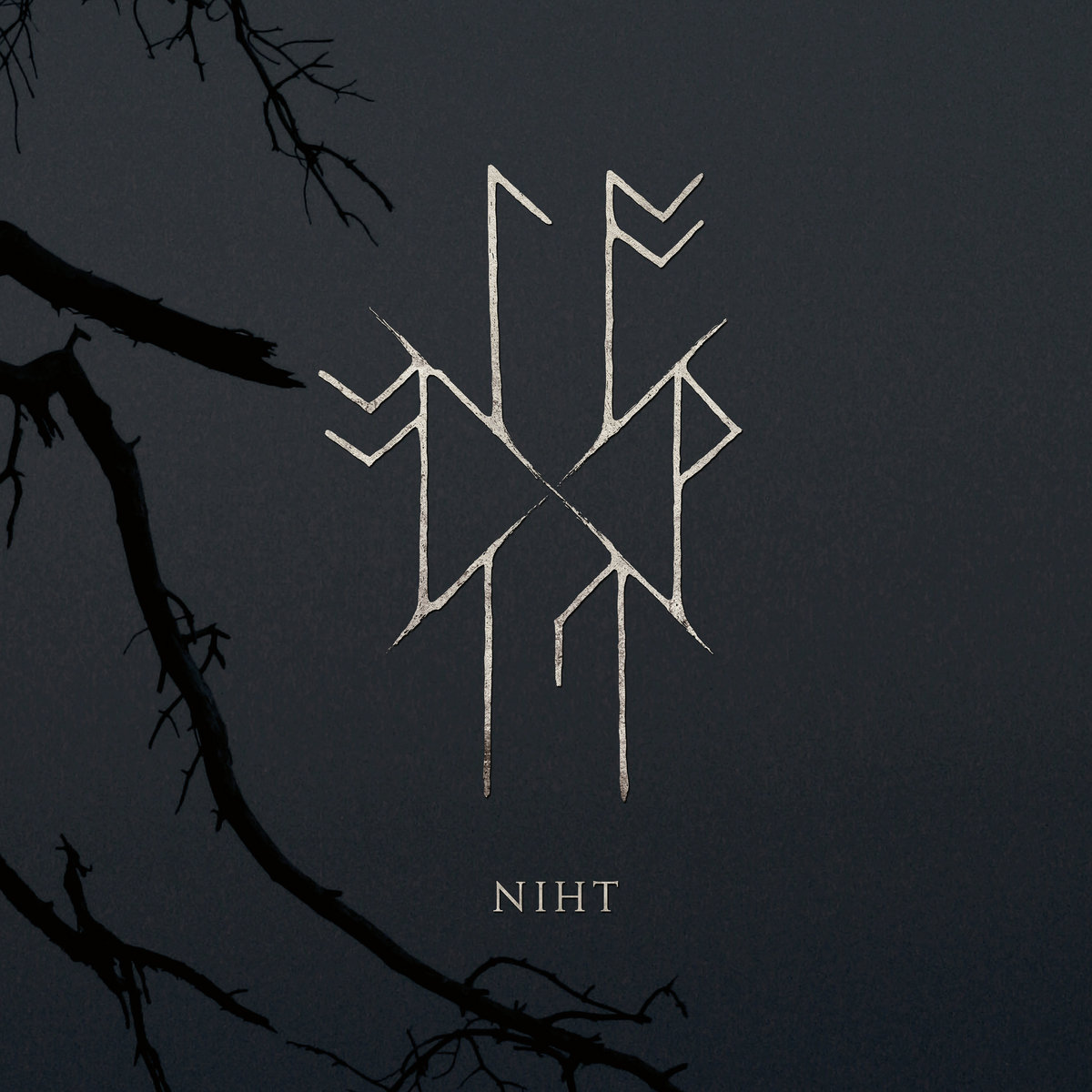
Sowulo – NIHT
Release Date: 29th August 2025
Label: Season of Mist
Bandcamp
Genre: Nordic, Viking, World, Dark Folk.
FFO: Wardruna, Heilung, Danheim.
Review By: Trina Julian Edwards
Dutch project Sowulo returns with their latest offering, Niht, set for release on August 29, 2025. This 13-track album promises a journey through time and, dare I say, consciousness, helmed by mastermind and multi-instrumentalist Faber Horbach. Niht features a wide variety of historical instruments, including the carnyx, nyckelharpa, taglharpa, Celtic harp, lyre, shaman drums, blow horns, bukkehorn, and the Irish bouzouki, taking listeners back to the ancient past. Press releases note that Horbach wrote this album while grieving the deaths of his father and stepfather, which is expressed through the mournful melodies and beautiful Anglo-Saxon lyrics. Niht continues to improve upon Sowulo’s signature sound, allowing fans to immerse themselves in another intriguing sonic landscape.
The album begins with Niwe Mōna, a stripped-down intro that sets the tone for what follows. Vocalist Micky Huijsmans harmonizes with herself, perhaps, to the occasional thump of a drum. A third vocal line from Huijsmans creates a dissonant chord that drives the intensity and creates the desire for resolution that never exactly comes.
Seolfren Sicol begins with an ostinato from the strings, which ushers in the main idea. The powerful drums add a syncopated rhythm in places, which seems to be at odds with the strings, yet it adds an interesting sort of tension. The vocals have the air of a plainchant, which is a type of monophonic music with a single melody line. Both Horbach and Huijsmans are singing the same notes, but Horbach’s harsher singing style introduces overtones that give the vocal line a brighter, richer sound. This only works as well as it does because Huijsmans is singing the same line, only an octave higher. During the instrumental break, the strings and percussion refer back to the intro, but with a simpler rhythm, highlighting the horns. The vocals restate the previous themes, dropping in tempo through the outro.
Āsteorfan means “to die,” in Anglo-Saxon. However, without even understanding the words, this composition evokes a feeling in the listener that death is imminent, but that it is not the end. The nyckelharpa in the intro immediately sets the nerves on edge. However, the disconcerting call of the carnyx makes manifest a vision of the ancient past. The throat singing techniques from Horbach and the haunting vocals of Huijsmans seem to mimic the carnyx, augmenting the eerie atmosphere. Horbach and Huijsmans utilize the monophonic as a way to introduce the countermelody into this memorable and otherworldly vocal line. The percussion is precise, but it feels organic and drives this composition to some extent. The more staccato rhythm punctuates the legato vocal lines to the benefit of both. All of the dramatic elements combine to create a composition with incredible depth of feeling. Āsteorfan is one of my favorites.
Sōl ond Māni is another highlight that must absolutely be heard. It has a slower pace, almost dirge-like, but it is no less dramatic. The nyckelharpa is once again at the forefront of the composition, but the carnyx cuts right through the drone, adding a spooky note that sets the mood. Huijsmans’ vocals are superb, both powerful and unearthly as she alternately croons, belts, and whispers the vocal line. Her control is excellent. Horbach’s vocals are on the lower end of the scale, but this contrasts beautifully with Huijsmans’ leads, echoing the duality of the sun and the moon, as well as the idea of continuous cycles of night and day. At around 4:33, all sound creeps to a halt before abruptly dropping back in for a final chorus. The intense dynamics keep the piece from dragging, despite the funereal tone.
Full Mōna begins with Huijsmans’ vocals over a lyre or harp, punctuated by the horns. The tempo accelerates slightly when Horbach joins Huijsmans, and they use more perfect intervals in the vocal lines of the verses. The rhythmic throat singing techniques of the chorus evoke the idea of an army on the march after hearing the rallying cry of the horn. Huijsmans’ higher, more ethereal-sounding vocals add some color to the piece, and the percussive fills in the spaces between the beats add texture. Every element emphasizes the tonal center, or the focal point, which is most pronounced during the chorus.
Horbach showcases his clean vocals on Miċele Steorran, joined by Huijsmans and a choir of voices on the chorus. While there is no lack of historical instrumentation here, this one has the feel of a more contemporary-sounding composition. At around 2:14, the instruments drop back to allow the ethereal vocals from Huijsmans to soar. This track is a bit more static, lacking some of the dramatic dynamics of the previous tracks, but it perfectly speaks to the idea of thoughts becoming slower as “darkness unfolds” and “night’s curtain” falls.
Mōnaþblōd is one of the more unique tracks on the album, with a raw, rhythmic intro that creates an almost oppressive aura. It slides into a snaky, Phrygian mode, giving it a darker, more mysterious feel, which perfectly suits the narrative themes of fertility, feminine wisdom and power, and the way the female cycles echo the sacred cycles of the moon. Huijsmans uses her powerful, seductive vocals to control the mood and provide the underlying rhythm, which calls to mind the rattle of a snake. It sounds more like what we perceive as Middle-Eastern than what we would imagine as Anglo-Saxon, based on the previous compositions.
Nihtēagan is another gorgeous composition, with the stringed instruments providing the perfect backdrop. The vocals have plenty of force but sound effortless, like the singers are just exuding confidence in their natural ranges. The powerful chorus returns to the unison vocal lines we’ve heard on earlier tracks, with the lyre seeming to play a note in between the octaves. This track has a dramatic, almost operatic feel, with the vocals weaving in and out among the instruments, almost as if the vocalists are performing different roles. Once again, Huijsmans’ vocals are exceptional, and Horbach is the perfect complement.
As the name indicates, the carnyx is the star of Carnyx. The otherworldly cry of this instrument transports listeners to the ancient past, where the sound of the horn reverberating across the landscape was a call to arms for Celtic warriors. It’s no wonder it was said to have been used as a psychological weapon, because some of these sounds are terrifying.
Eald Mōna is a completely instrumental track that makes you think about our ancestors dancing around a bonfire to keep the dark and the demons at bay. The stringed instruments in the intro slowly swell and retreat, sighing and droning alone for about the first minute. They are then joined by the percussion, which accelerates the composition and gives it the movement and drive it needs to carry a 5-plus-minute song. At around 4:33, the tempo abruptly drops, returning to the stringed instruments through the outro. Although this track is one of the longer ones, it’s eerily evocative of those ancestral memories we’re all half-afraid might be real.
The Irish bouzouki in the intro to Swefnian gives this track a foreboding feel right from the start, giving voice to the idea of light “temporarily hidden” and Earthly night as “the earth’s shadow.” The pace remains fairly slow throughout, which also highlights the narrative that “we dream in the darkness…” They emphasize major chords more so in this track than others, lingering just long enough to catch your attention amongst the sea of minor chords. In this piece, Horbach’s vocals act as the countermelody to Huijsmans’ leads. They utilize a variety of dynamics and slight tempo changes, but it’s not quite enough to offset the lack of development. Unlike other tracks, the static quality does not feel as purposeful.
The abrupt change from the higher to lower throat-singing techniques near the beginning of Heolstor Sċeadu is an interesting way to give the track a different texture and encapsulates the idea of intention “[coming] into existence” from the darkness. As we’ve seen before, Huijsmans sings the same melody line an octave higher, but Horbach switches to a line that feels in between the two registers. They repeat the cycles, but the use of large intervals and doubling gives the listener a feeling that the composition is ascending. The tempo drops to allow us to hear the overtones in the instrumental accompaniment and the solo nyckelharpa before a last repeat of the cycle. This AABA approach to the chorus harkens back to the approach used on Āsteorfan. Of course, this makes sense, as both themes focus on the need to step fearlessly into death or darkness, knowing that it’s not all there is.
The album closes with Genihtian, another instrumental piece. The instruments sound more subdued, with all of the edges softened. It gives the impression that the sound is coming from a distance, evoking images of a rallying cry traveling across the water. You can almost see the lit beacons of Minas Tirith in the distance. A beautiful ending.
Overall, Sowulo promised us a musical journey, and Niht delivered. The historical instruments, the philosophy of an ancient time, and the sincere simplicity of the Anglo-Saxon lyrics give Niht an authenticity that is often lacking, not only in our music, but also in our lives. On the first listen, I purposefully did not look at the translations. However, as it happens, the band, under Horbach’s leadership, does an excellent job of expressing these themes regardless.
There were a few moments where it was a bit too static and monophonic, and I could have used a few more of our modern sensibilities. While I stand by this opinion, I am more than willing to admit that it could be a “me” problem, more so than the compositions, as everything seemed very intentional. Speaking of modern, Niht had just the right amount of modern production, allowing us to hear everything in the mix without losing the rawness that this type of project requires. Huijsmans is an incredible talent, using her voice like the instrument that it is. All of the musicians are top-notch, and Horbach’s vision really came to life in Niht. Take a trip back to ancient Northern Europe with Sowulo this Friday, August 29.
 (3.5 / 5)

